
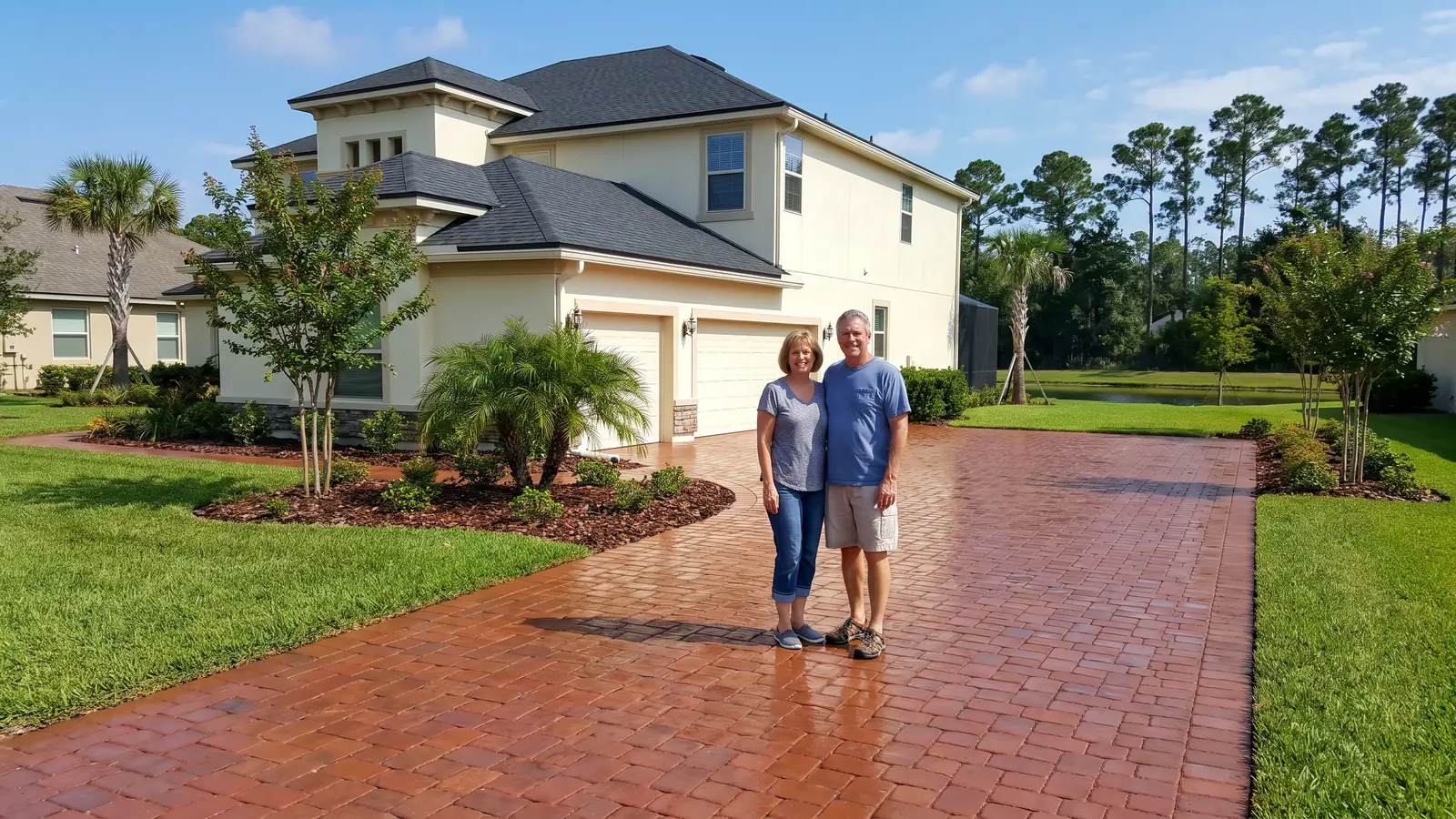
Paver sealing for Longwood homes
Paver Sealing in Longwood, FL
Pavers beside Longwood's old village streets can be cleaned and sealed, so call (689) 334-1209 for a free estimate.
- Brings out deeper paver color
- Fresh joint sand helps lock pavers in place
- Gives weeds less room to grow
- Makes the surface easier to keep clean
- Free estimate, no obligation
Request a Free Estimate
Free, no obligation.
Fast, careful paver sealing in Longwood
Paver sealing is a phone call away for homes in Longwood, from the old railroad village to the I-4 edge of town. A local contractor washes, re-sands and seals drives, walks, pool decks and patios around Longwood, and the estimate is free. Call (689) 334-1209 and expect an answer inside 1 business day, usually much sooner.
Maybe your front walk has gone gray, with a green stripe where the roof drips and weeds in every seam. A wash, new sand and a fresh coat bring the whole surface back to a single clean tone. Not ready to book? You can send in the short estimate form just to ask what your pavers need.
Most people call after a rainy summer, when the green is hard to ignore. The contractor can tell you in a few minutes whether the job is a wash, a re-sand, a full seal or all three. That saves a wasted weekend of scrubbing. To get on the calendar, call (689) 334-1209.
Why hire a local paver sealing contractor in Longwood?
Longwood has houses from the 1870s and houses from last year, and their pavers need different care. A local paver contractor sorts that out for you, so send in the short estimate form.
A free walk-around
The contractor looks at your Longwood driveway, walk or pool deck at no charge and gives you a price before work is agreed.
A range you can check
Central Florida firms post $1.50 to $3.00 per square foot for a clean, sand and seal job. Compare any Longwood bid with it.
Care for older surroundings
Near the historic district you may have old wood, brick or stone beside the pavers. Ask how the contractor protects them.
No pressure to hire
The estimate is free and carries no obligation. You choose the date, the finish and whether to go ahead.
Get Your Free Estimate in Longwood
Tell us about your pavers in Longwood.
Free, no obligation
What paver problems show up most in Longwood?
Pavers beside century-old homes
The Longwood Historic District holds 37 historic buildings across about 190 acres, among them the Inside-Outside House from 1873. Homes that old have seen several owners and several yard projects. A past owner may have used a sealer nobody wrote down. Water-based sealer cannot go over solvent-based sealer, so the contractor has to learn what is there first. A little paperwork from an earlier owner, such as a receipt or a can label, makes that quick. Longwood has about 15,087 residents, and many of them live in homes built long after the historic district. Pavers on those newer lots are often young enough to need only a wash and a first coat. Historic homes also tend to have more landscaping near the walks, which means more to protect and more leaf fall.
Leaf stains under big trees
Big Tree Park in Longwood shows how large cypress and other trees can get here. A Lake Mary paver company says it pre-treats leaf tannins along with algae and rust. If your driveway sits under heavy branches, stains from fallen leaves can set into the surface, usually as brown patches that a broom will not lift. A paving trade article adds that treatments help less where pavers stay damp and shaded. The county's wet season does the most harm to leaf-covered pavers. Brown patches that show up in July often stay until a proper wash in the cooler months. Leaf stains vary with the tree, so the contractor may use more than one treatment.
A rush to dry out after summer rain
Seminole County has dry winters and wet summers, with nearby Sanford averaging about 49.63 inches of rain a year. Longwood sits roughly 75 feet above sea level, yet a storm still soaks pavers. Sealer needs a dry surface. That is why a Longwood job may slide a day or two in July and go smoothly in February. Planning around that is part of a good estimate. CR 427 is also called Ronald Reagan Boulevard, and SR 434 crosses the city to US 17/92. Drives that face these roads see more dust than quiet cul-de-sacs do. Longwood's old rail corridor is now a SunRail stop, and the roads around it carry steady traffic.
Joint sand that has thinned out
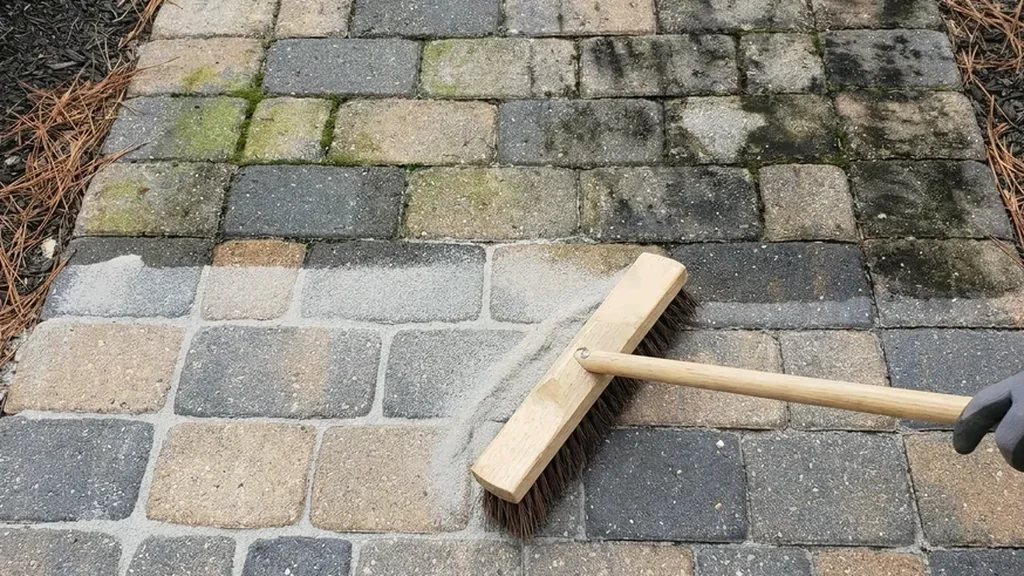
The same paving article explains that when joints widen, soil can enter and support weeds. In Longwood you see this on older drives, where years of storms and washing have taken sand from the seams. Pulling weeds alone does not fix it. New sand is packed in after the wash, and that is what gives the sealer a firm edge to hold. Skipping this step is a common reason a coat looks patchy at the seams. Sand loss is slow, so most owners miss it until weeds show up. A look at the seams along the edge of the drive tells the story. A dry week in winter is a good time to check seams for sand loss.
Sunken spots that hold water
A dip in a driveway or walk collects water, and damp pavers grow green film faster. One Central Florida company lists re-leveling as part of a full restoration, along with stripping old sealer. Ask the contractor to mark any low spots during the walk-around. Fixing them before the coat goes on means you are not sealing in a puddle. It also keeps rain from pooling on the new coat. Tours of the Bradlee-McIntyre House run on the 2nd and 4th Wednesdays and Sundays, and the house itself was lifted from its first site to save it. Pavers are easier to fix than a house, but the same lesson holds: repair low spots early. A lifted edge can catch a shoe or a mower wheel, so it is worth fixing for safety as well as looks.
Does paver sealing differ in Historic Downtown Longwood and The Woodlands?
Yes, because the two areas grew up in different eras. Historic Downtown Longwood dates to the 1870s and 1880s, when the South Florida Railroad arrived in 1880, and its district was listed on the National Register of Historic Places in 1990. Homes there often sit close to old trees, deep porches and brick, so pavers on those lots can stay shaded and damp longer. When you send in the short estimate form, say which part of town you are in.
The Woodlands is a newer story. Longwood Slade Airport closed in the late 1960s and the land became The Woodlands, whose entrance road is still called Slade Drive. Homes built since then tend to have pavers of one age, which makes a wash and one coat simple to plan, as long as nobody has patched sections with a different product. Call (689) 334-1209 and give the approximate year your pavers went in.
Other parts of the city follow the roads. SR 434 crosses Longwood to US 17/92, CR 427 is also called Ronald Reagan Boulevard, and a slice of I-4 touches the west side. Driveways along busy roads pick up traffic film and dust that quiet side streets never see. If your drive faces one of these roads, send in the short estimate form and mention it.
Historic Downtown Longwood hosts the 50th annual Arts and Crafts Festival on November 21 and 22, 2026, and a cruise-in car show meets there too. Crowds like that fill nearby streets and driveways. If you are planning a job close to downtown, ask about timing around those weekends. To check dates, send in the short estimate form.
What does paver sealing cost in Longwood?
A clean, sand and seal job is commonly published at $1.50 to $3.00 per square foot by Central Florida companies. Inside that range, Longwood prices move with old sealer, thin joint sand and green growth on the surface. Large drives and wraparound patios cost more in total because every foot is counted. To get a price on your Longwood pavers, send in the short estimate form; the estimate is free.
Older lots can shift the price in small ways, since a walk reached only by hand carrying, or a courtyard hemmed in by beds and old brick, takes longer than an open drive. Re-leveling a sunken spot is extra work too. Call (689) 334-1209 and the contractor can tell you which of these touch your property.
| Paved area | Typical example | Clean, sand and seal |
|---|---|---|
| 300 sq ft | Small patio or walkway | $450 to $900 |
| 600 sq ft | Two car driveway | $900 to $1,800 |
| 1,000 sq ft | Large driveway or pool deck | $1,500 to $3,000 |
| 1,500 sq ft | Driveway plus pool deck | $2,250 to $4,500 |
Math based on the $1.50 to $3.00 per square foot that Central Florida paver companies published as of November 2026. Your contractor sets the actual price after seeing the surface. Repairs, leveling and stripping failed sealer are usually extra.
How does a paver sealing job work in Longwood?
Start with the past
A Longwood contractor begins by asking how old the house is and what has been done to the pavers. In the historic district, a lot may have had several owners and several coats. Water-based sealer will not go over solvent-based sealer, so the old product has to be identified. Dips and lifted edges are marked on the same walk-around. Ask the contractor to note any wood trim or old stone near the pavers. That list tells the crew where to be careful. A tape measure and a notepad are the first tools out, since the quote starts with the true area.
Treat, then wash
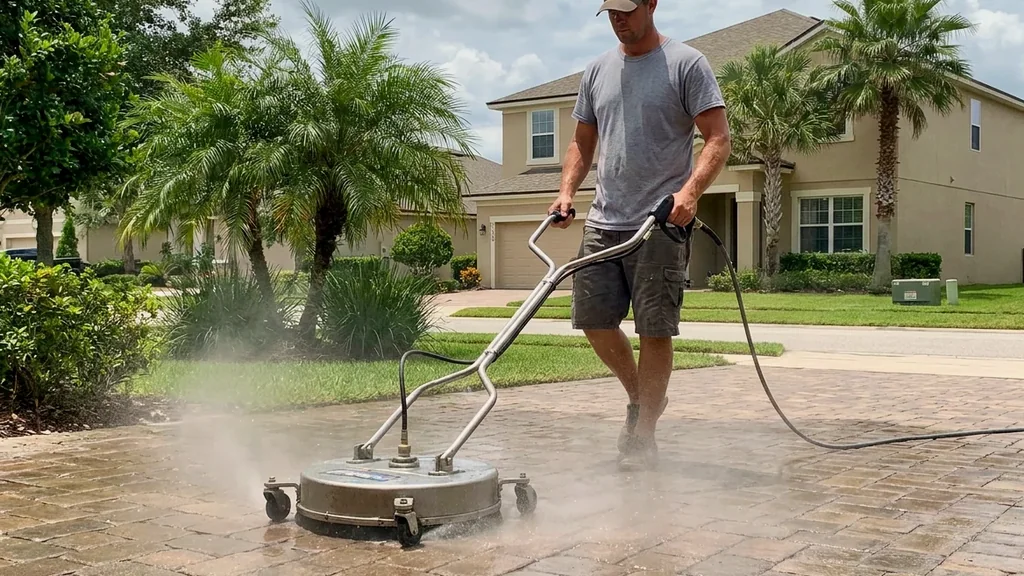
Stains and growth are treated before the wash begins. A Lake Mary company pre-treats algae, leaf tannins and irrigation rust and then washes in stages. Near older homes, rinse water is kept off wood siding, old brick and plantings. The wash also frees the sand in the joints, which is replaced next. A test spot at the edge of a drive shows how the surface reacts to the cleaner. It takes a minute and prevents surprises. Cleaners differ for brick-style pavers and gray concrete, so the surface type matters.
Fill and level
Sand goes back into every seam, and low spots can be re-leveled. Full joints stop pavers from shifting and leave weeds little to grab. Drives that have not had sand in years may take a lot. The surface is swept, and loose grains are brushed off so they do not end up under the coat. Some Longwood driveways run along old oak roots. Roots can lift pavers, and lifted edges are marked for repair. Edges next to garden beds are packed by hand, since machines do not reach them cleanly.
Give it time to dry
The surface must be dry before sealer goes on, and shade from big trees keeps some corners wet for hours. Summer afternoons in Longwood can bring storms, so crews like a morning start. If rain looks likely, the job waits a day. Waiting a day costs less than a coat that clouds over. If you are near the SunRail station, street parking may be tight on a weekday. Tell the contractor so the truck is placed well. A hose bib and a clear drive are usually all the crew needs from you.
Spray, roll and rest
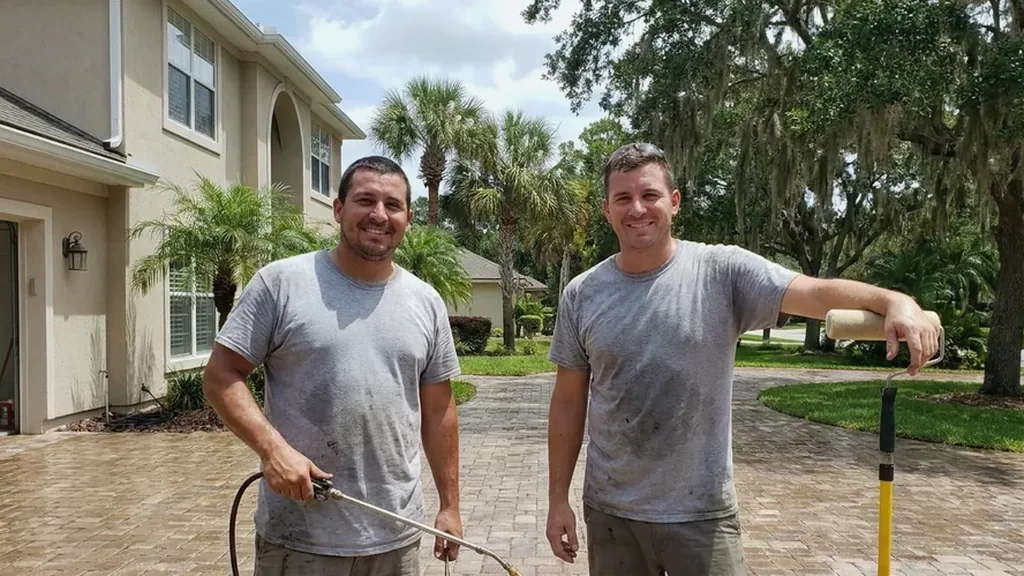
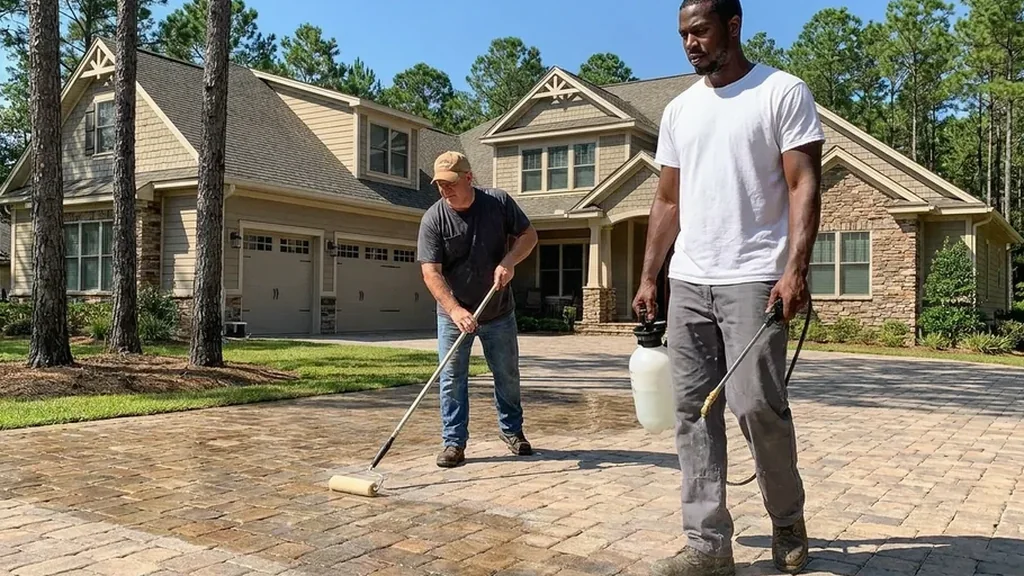
A sealer maker's bulletin names spray and back roll as the usual method: a sprayer lays the product down, and a slit foam roller evens it out. Rolling after the film turns tacky can damage it, so crews work in sections. A wet look shows scuffs before matte does. Ask how long to wait before walking and parking. Sealing is a surface job, not a repair. Cracked or sunken pavers should be fixed first, then sealed. A final walk with the contractor catches spots that look thin or uneven.
Complete paver services in Longwood
Longwood work follows one order: wash, sand, dry, seal. Cleaning clears growth, sand fills the seams, drying comes next, and the coat finishes the job. Sealing last keeps dirt from being trapped. To learn how long each stage will take at your house, call (689) 334-1209.
Drives, front walks and screened patios wear in different ways. Drives take tires and oil drips, walks pick up leaf stains, and pool areas take splash. Travertine and concrete pavers need different products, so say which you have. Share a photo of your pavers and any stains when you send in the short estimate form.
The first choice is water-based or solvent-based, and an old solvent coat rules out a water-based topcoat. The second is matte or wet look. Matte suits an older porch and hides small scuffs, while a wet look deepens red and charcoal pavers. Call (689) 334-1209 to talk through finishes.
Summer rain sets the calendar in Longwood. Storms can arrive on many afternoons, so morning starts make sense, and a clear next day helps the coat settle. Areas under trees may come due sooner than an open drive. To pick a date that suits your yard, send in the short estimate form.
Questions to ask before you hire
- Do you bring your own water and power, or do you need to use mine?
- Can you work around my screen enclosure, sprinkler heads and landscaping?
- What does the price include, and what costs extra, like stripping an old coat?
- What do you do about the white haze that keeps coming up through my pavers?
- Does the quote cover re-sanding joints where the sand washed out?
- How often should pavers be resealed in Central Florida sun and summer rain?
- Will the sealer make my pool deck slippery when it is wet?
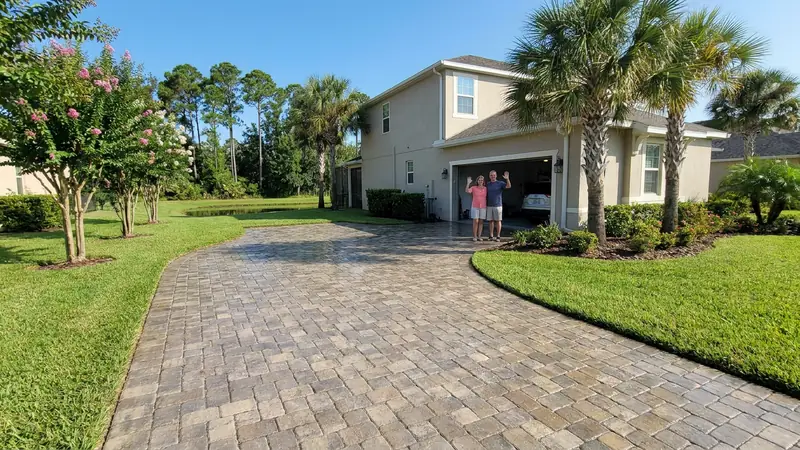
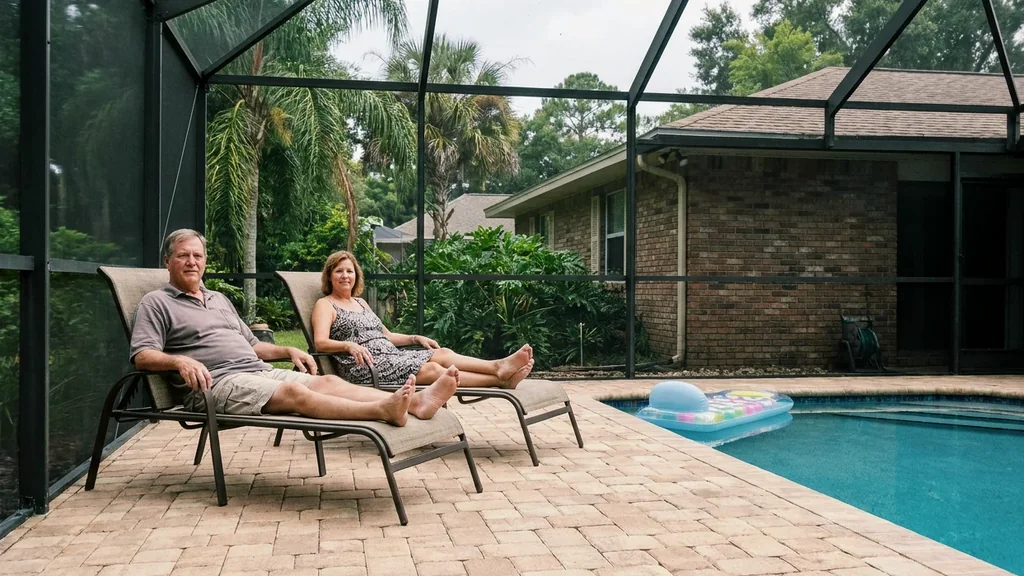
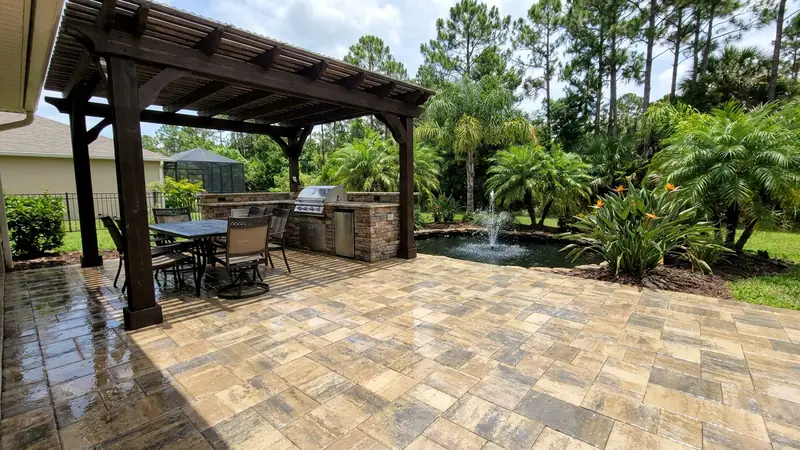
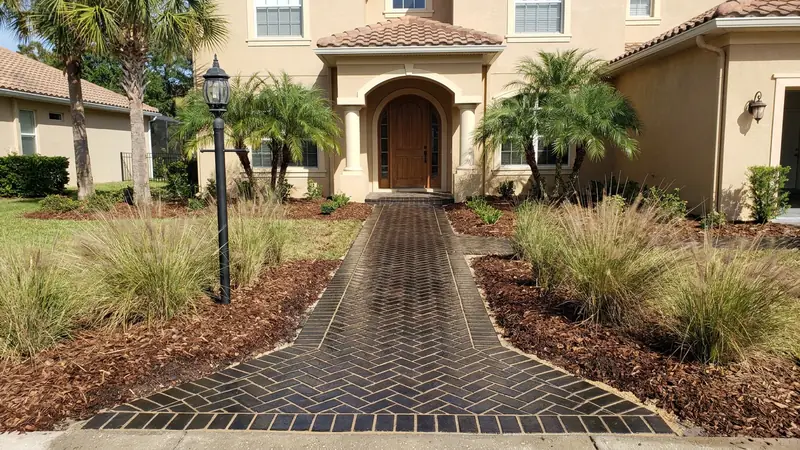
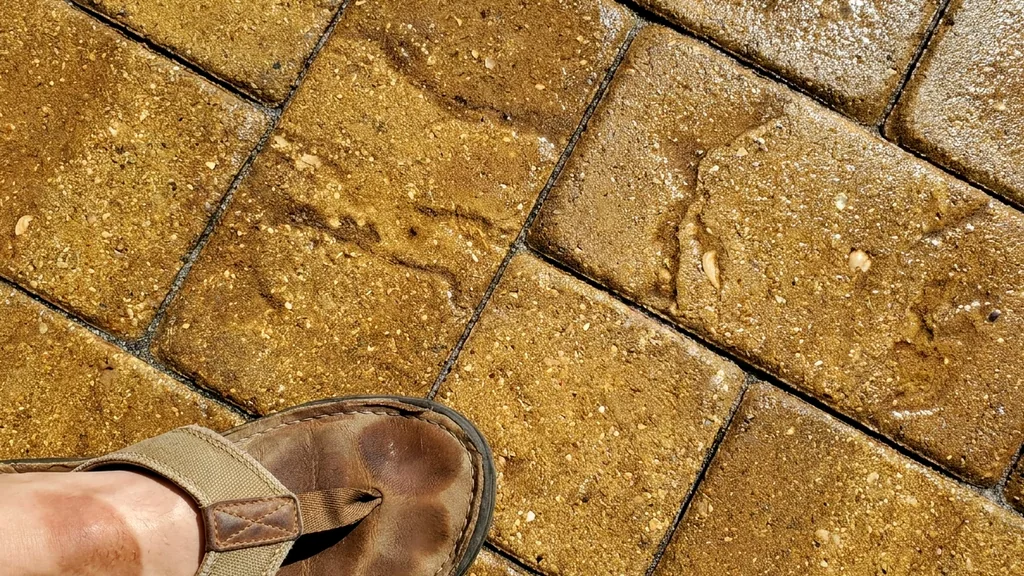
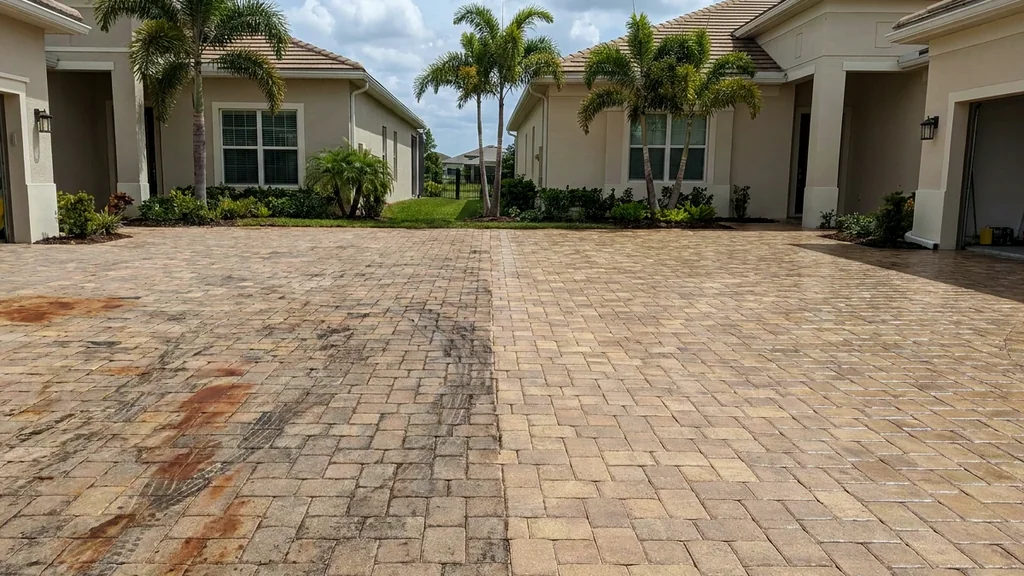
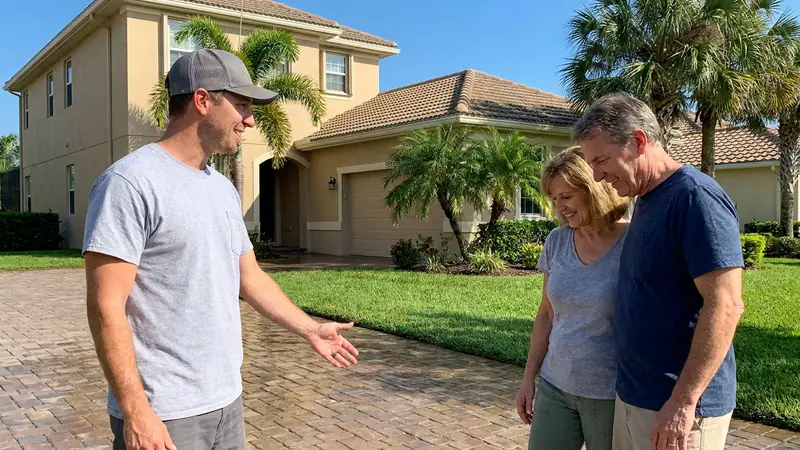
What do sealed pavers look like around Longwood?
Why local matters in Longwood
A contractor who knows Longwood has probably worked on an 1880s cottage and a Woodlands home in the same month. That helps, because the two need different questions. The first is about old products and fragile plantings, and the second is about sprinkler spray and tight driveways. To reach someone who works Longwood jobs every week, call (689) 334-1209.
Local work also means local weather sense. Longwood summers bring heavy rain that clears fast, so a good crew watches the sky by the hour and knows which corners of a yard stay damp. Ask how they handle a job that gets rained on halfway, and send in the short estimate form to start that talk.
Parking and access are practical matters too. Near the SunRail station and the old downtown blocks, street parking and tight driveways shape how gear gets in and out. A contractor from the area plans for that, including where the truck will sit. If your street is tight, send in the short estimate form and say so, with no obligation to hire.
How old is Longwood, and does that matter for my pavers?
It matters a little, because many Longwood lots date to the first winter visitors. Edward Warren Henck named the town after a Boston suburb, and the railroad came in 1880. The Inside-Outside House went up in 1873 as a prefabricated home shipped from New England. If you own an older lot near these streets, call (689) 334-1209.
The Longwood Village Inn began as a casino in the 1930s and later housed an umpire school. The Bradlee-McIntyre House, a Queen Anne home built around 1885, was moved here from Altamonte Springs in 1973. The Arts and Crafts Festival fills Historic Downtown each November, and Big Tree Park keeps Lady Liberty, a cypress at least 2,000 years old. For a walkway near any of these places, send in the short estimate form.
Down the road from the downtown blocks, newer streets fill in around the old village. A person who lives on one of them has little in common with the owner of an 1880s cottage, yet both pay the same sun and rain bills. That is why a Longwood contractor asks about your house first. To start with a few questions, call (689) 334-1209.
Frequently Asked Questions
How long does paver sealing last in Longwood?
Coats tend to last two to five years, going by what companies commonly quote. Shade under big trees, daily car tires and a wet look finish can all shorten that span. Ask the contractor to write the sealer name on the estimate so the next coat matches, and keep that paper with your house records. A sunny open drive may sit near the long end.
What do professionals use to seal pavers in Longwood?
Professionals use a water-based or solvent-based sealer, applied by spray and then back-rolled. A sealer maker's bulletin names that method as the usual one. The old coat decides which type can go on, so ask for the product name. Ask which sealer family sits on your pavers now before choosing.
How much is paver sealing in Longwood?
Central Florida firms post $1.50 to $3.00 per square foot for a clean, sand and seal job. Old sealer, thin joint sand and heavy growth push a Longwood job up inside that range. Ask for the area to be measured and listed, so you can check the rate against what others publish. Large drives off CR 427 take longer than small side walks.
How often do you seal pavers in Longwood?
Plan on a new coat every two to five years, based on what companies commonly quote. Shaded walks and busy drives sit toward the short end. A quick look at the surface each spring tells you whether water still beads or soaks in. A shaded walk may need a coat sooner than a sunny drive.
What happens if pavers in Longwood are not sealed?
Sun, storms and humidity fade the color and wash sand out of the joints, according to a Central Florida paver company, which lets weeds and growth take hold. Sealing slows that cycle. It does not stop it, so joints still need sand over time. The color you see today is what the coat is there to hold.
Why is paver sealing so expensive in Longwood?
The price covers more than the sealer. A contractor treats stains, washes, re-sands and then seals, and the surface must dry in between. That is several stages and at least a day of work, so a total reflects the size of your pavers and how much work each stage needs. Older surroundings near the historic district can add a little time.
Does a Longwood sealing job work around summer storms?
Yes, a careful contractor waits for a dry surface. Seminole County has wet summers, so dates may shift. Ask how a job is rescheduled if rain comes halfway through, and whether a morning start is planned. Many crews prefer mornings because the surface has time to dry before the afternoon clouds build.
Can pavers near old Longwood homes be sealed safely?
Yes, with a little extra care. Water-based sealer cannot go over solvent-based sealer, so the old coat is identified first, and a small test spot can show how the surface takes new product. Ask the contractor to keep rinse water off older siding, stone and plants near the pavers. A short walk-around before work starts lets you point out anything fragile.
Ready for a Free Estimate in Longwood?
Call (689) 334-1209 and tell us about your pavers.
Free, no obligation